Sports Injury Recovery Timeline: What to Expect
An injury pulls you out of the game and leaves you guessing. You want the answer to one question: how long until you return. Your sports injury recovery time depends on the type of injury, how bad the damage is, and how early you start treatment. At ProTouch Physical Therapy in Cranford, NJ, a skilled physical therapist guides active adults through every stage of healing with one-on-one care. This guide helps you understand what to expect during recovery, from the first week of protection through your return to full activity.
What Sets Your Sports Injury Recovery Time
Recovery from a sports injury follows a clear path. The length of that path changes from person to person. Two injuries with the same name can heal at very different speeds. A mild ankle sprain resolves in about two weeks. A torn ligament can take most of a year. Tissue type matters most, because muscles and tendons repair faster than ligaments, bone, and cartilage. The severity of the injury plays a large role too, since a minor strain recovers far quicker than a full tear. Your overall fitness also counts, as age, weight, and baseline conditioning affect how fast your body rebuilds.
Treatment timing may be the factor you control most. Research shows that early physical therapy shortens recovery and lowers your re-injury risk. Athletes who start rehab soon after an ankle sprain report much less long-term pain and instability. The same pattern holds for shoulder pain and knee pain. The sooner you recover from a sports injury, the smoother the road back.
Your sport also affects the finish line. A return to recreational cycling asks less of a healing knee than competitive soccer. A physical therapist reads these demands and builds a recovery plan that fits your real activity, not a generic checklist. This is why two athletes with the same specific injury can follow different timelines.
Sports Injury Recovery Time by Injury Type
Recovery timelines vary widely by injury. Use these general ranges as a starting point, not a promise. Your body and your sport shift the numbers in either direction.
- Sprains and strains: 2 to 8 weeks
- Tendonitis and overuse injuries: 4 to 12 weeks
- Fractures: 6 to 12 weeks
- Shoulder injuries such as rotator cuff strains: 3 to 6 months
- ACL tears and other major ligament damage: 6 to 12 months
Typical recovery for a sprain runs a few weeks. For a ligament tear, recovery typically stretches to several months. These ranges cover the common sports injuries we treat most often. A runner with Achilles pain from repetitive stress usually improves within three to twelve months when a loading program guides the healing. A hamstring strain often settles within a few weeks with the right program. The right plan moves you through the timeline faster and guards against re-injury.
Overuse injuries need extra attention. Tennis elbow, golfer's elbow, and patellar tendon pain build slowly and often linger when you ignore them. Sports injury treatment clears symptoms in most cases within three to six months, while the wait-and-see approach can stretch pain out for a year or longer. People who start structured physical therapy within the first three months recover faster and cut their risk of chronic pain.
The Four Phases of Sports Recovery
Healing follows a clear order. Your body needs each phase to finish before the next one works. Sports injury rehabilitation helps athletes return to sport safely by moving through four stages. Each phase rebuilds motion and strength in the right order. ProTouch Physical Therapy builds your recovery process around these steps.
Phase 1: Protection and Pain Control
The first phase reduces swelling and calms pain. The RICE method drives this stage, which stands for Rest, Ice, Compression, and Elevation. A brace, cast, or sling may protect the area while the tissue settles. This phase sets the base for everything that follows, so rushing it often backfires.
Phase 2: Restoring Range of Motion
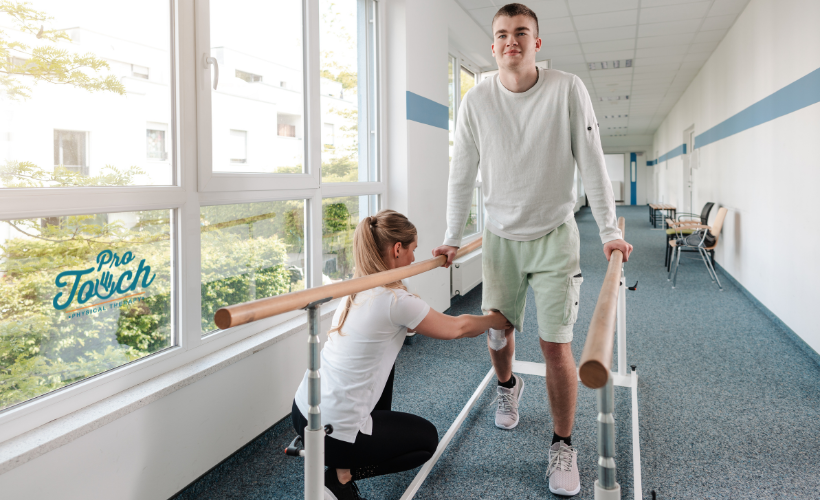
Once swelling drops, gentle movement begins. Controlled motion prevents stiffness and restores full range of motion. Your therapist guides each movement to keep the healing tissue safe. Skipping this phase leaves the joint stiff and raises the risk of a repeat problem.
Phase 3: Strength and Conditioning
When the tissue can handle load, strength work starts. Strengthening exercises rebuild muscle mass and restore joint stability. This phase closes the gap in strength and mobility that the injury created. Home exercises extend your progress between sessions. Strong, stable joints carry you back to your sport with far less risk.
Phase 4: Return to Activity
The final phase retrains your movement patterns for your specific sport. Sport-specific training prepares you for the demands of competition or heavy workouts. This stage rebuilds psychological readiness, so you regain confidence to cut, jump, and sprint without fear. Full sports participation comes only after you pass these tests. A strong return to play marks the true end of your recovery journey.
What to Expect After ACL Surgery
An anterior cruciate ligament tear sits at the long end of the timeline. Many athletes need ACL reconstruction, and recovery after that surgery usually runs six to twelve months. ACL recovery moves through the same four phases, though each one takes longer. What you expect after surgery depends on your graft, your effort in therapy, and how fast you heal. Whether you recover from an injury or surgery, the phases stay the same. Surgery just adds time to each one.
How to Speed Up Your Recovery
Your daily habits shape your sports injury recovery time as much as your rehab sessions do. Small choices add up over weeks. Focus on the habits with the strongest effect on healing:
- Sleep at least eight hours a night. Deep sleep drives the tissue repair that happens while you rest.
- Eat enough protein. Protein gives your body the material to rebuild muscle and tendon.
- Keep staying active in safe ways. Light cross-training protects your fitness base while you sit out.
- Stay engaged with your team. The mental side matters, and connection protects your mood.
These habits support the clinical work, but they do not replace it. Physical therapy can help you set realistic expectations for your timeline and reach them. The two together give you the fastest, safest path back.
Why Personalized Care Shortens Your Timeline
Generic therapy treats every patient the same way. That approach stretches recovery and misses the details of your injury. ProTouch Physical Therapy works differently. Scott Gander, a sports medicine specialist with more than 20 years of orthopedic experience, leads each case. You get one-on-one attention with no time limits, so your plan fits your body, your sport, and your goals.
This personal approach helps many patients avoid surgery. In sports medicine, research shows that for common problems such as rotator cuff pain, tennis elbow, and knee pain, conservative care often matches surgery over the long term. A skilled therapist can guide you to full function without the operating room. Most of our patients are active adults between 40 and 55 who want a successful recovery and prefer to skip surgery when they can.
A high-volume clinic often hands you off to an aide. That model slows progress and misses the small signs a healing injury sends. We watch your movement, adjust the load as you get stronger, and answer your questions in the moment. This close attention supports a smooth recovery for athletes of every level.
Start Your Recovery with ProTouch Physical Therapy
If you are sidelined by a sports injury, your sports injury recovery time does not have to be a guessing game. Whether you are recovering from a sports injury on the field or recovering from an injury at the gym, a clear plan and early treatment move you back to the activities you love. ProTouch Physical Therapy in Cranford, NJ works to help athletes across Union County recover from injuries and start getting back in the game with personalized, one-on-one care. Call (908) 325-6556 to schedule your evaluation and begin your sports recovery journey.