TMJ: What It Is and How Physical Therapy Can Help
TMJ (Temporomandibular Disorders) affect between 5% and 12% of adults, causing pain and discomfort in the jaw joint and the muscles that control it. The temporomandibular joint connects the jaw to the skull and makes it possible to chew, speak, and yawn. When this joint stops working properly, everyday activities become painful. Physical therapy offers effective nonsurgical treatments through hands-on techniques, targeted exercises, and postural correction. A physical therapist can help you reduce pain, restore jaw function, and avoid invasive options such as injection therapy or surgery.
Pro Touch Physical Therapy in Cranford, NJ specializes in TMJ rehabilitation and achieves a 95% symptom relief rate in just one to two visits. This guide covers what TMJ disorders are, what causes them, and how a therapy plan built around your condition restores normal jaw function.
Understanding the Temporomandibular Joint
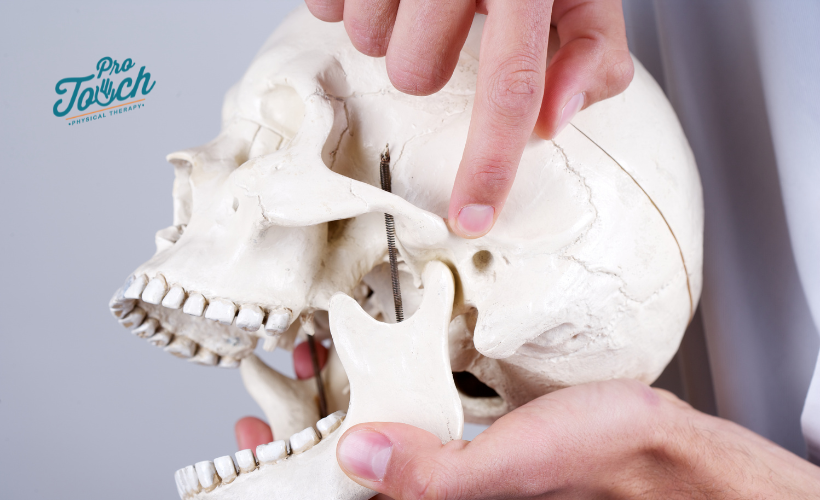
The temporomandibular joint is a hinge joint located in front of each ear where the jaw bone meets the skull. It controls how your jaw moves — opening and closing your mouth, shifting side to side, and pushing forward and back. A small disc made of connective tissue and cartilage sits between the ball and socket to cushion each movement.
The joint depends on muscles, ligaments, and cartilage to work properly. When structures around the joint become irritated or strained, pain follows. The muscles around your jaw are the most common source of TMJ pain, followed by displacement of the cartilage disc.
Common Symptoms of TMJ Disorders
TMJ disorders produce a range of TMD symptoms that interfere with daily life. Many patients notice several symptoms at once, which makes accurate diagnosis essential.
The 6 primary symptoms of TMJ disorders include:
- Chronic jaw pain, clicking, popping, or grating sounds when you move your jaw
- Pain or tenderness in the jaw, face, neck, and shoulders
- Difficulty opening the mouth fully or chewing without discomfort
- Jaw locking in an open or closed position
- Chronic headaches, including migraines
- Ear pain, fullness, or ringing known as tinnitus
These symptoms often start mild and get worse over time. TMJ issues develop gradually as tightness and strain build in the muscles and joint. Pain frequently spreads from the jaw into the neck and head, which leads many patients to seek headache treatment before the jaw problem is identified.
What Causes TMJ Disorders?
TMJ disorders develop from several causes. Teeth grinding and jaw clenching — known as bruxism — rank as the most common trigger. This involuntary behavior happens during sleep and periods of high stress. Repeated force breaks down cartilage and strains surrounding muscles over weeks and months.
Injury or trauma also causes TMJ issues. Car accidents, sports impacts, falls, and lengthy dental procedures can damage the joint or stretch ligaments beyond their normal range.
Poor head and neck posture creates chronic tension in the jaw muscles. People who work at computers develop stiffness in the neck and shoulders. That stiffness refers pain directly to the face, forcing the jaw muscles to contract during the day and at night.
Arthritis affects the temporomandibular joint less often but can wear down the soft tissue cushion over time. Some patients manage early TMJ pain with over-the-counter medications or a cortisone injection, but these approaches only mask symptoms without fixing the underlying cause.
How Physical Therapy Treats TMJ Pain
Physical therapy is a first-line approach for TMJ rehabilitation. Studies confirm that physical therapy significantly reduces pain and improves jaw mobility. Our therapists are trained in specialized TMJ evaluation and treatment methods that go beyond standard rehabilitation protocols.
Manual Therapy Techniques
Manual therapy uses hands-on methods to reduce tension, relieve pain, and restore movement in the jaw. A physical therapist applies soft tissue massage, myofascial release, and joint mobilization to reduce muscle tension and reduce discomfort around the temporomandibular joint. These techniques ease muscle spasms, improve blood flow, and increase range of motion.
A thorough TMJ evaluation looks beyond the jaw itself. Research in the International Journal of Environmental Research and Public Health found that 44% of patients with cervicogenic headaches also have TMJ disorders. Manual therapy applied to both the jaw and upper neck decreases headache intensity and improves neck function. Pro Touch Physical Therapy examines the neck, shoulder girdle, and thoracic spine during every TMJ assessment to find all contributing factors.
Targeted Exercises for TMJ
Exercise therapy strengthens weak jaw muscles and stretches tight muscles to restore coordination and stability. A physical therapist prescribes exercises for TMJ based on each patient's specific condition across 3 categories.
Stretching exercises increase range of motion by stretching the muscles around the jaw and neck. Goldfish exercises are one common example. You place your tongue against the roof of your mouth and one finger on the front teeth, then slowly open and close your mouth. These movements reduce stiffness and relax the surrounding muscles.
Strengthening exercises build resistance through resisted opening and closing, side-to-side jaw movement, and forward jaw movement. These exercises restore balanced muscle function and help prevent future problems.
Posture correction exercises such as chin tucks target neck and shoulder tension that contributes to jaw pain. Better cervical spine alignment reduces strain on the temporomandibular joint during daily activities.
Pain-Relieving Modalities
Physical therapists use additional modalities to manage pain and reduce inflammation during treatment:
- Moist heat application to increase blood flow and loosen muscle tissue
- Ice therapy to reduce swelling and numb acute pain
- Ultrasound therapy to deliver deep heat to the joint capsule
- Dry needling to release trigger points in the jaw muscles for immediate relaxation
These modalities work alongside manual therapy and exercise to speed recovery between sessions.
Patient Education and Self-Care
Education is a key part of TMJ physical therapy. Patients learn to spot and change habits that make jaw dysfunction worse. Self-care strategies play a central role in long-term recovery. A physical therapist teaches proper resting jaw posture — tongue on the roof of your mouth, teeth slightly apart, lips gently together.
Managing stress levels directly reduces TMJ symptoms. Relaxation techniques such as deep breathing, meditation, and mindfulness lower overall muscle tension and decrease unconscious jaw clenching. General aerobic exercise also reduces stress that contributes to TMJ dysfunction. Patients receive guidance on avoiding hard or chewy foods, cutting back on gum chewing, and recognizing clenching patterns.
The Connection Between TMJ and the Cervical Spine
Your jaw and neck work as a connected system. Poor cervical posture changes how your jaw functions during chewing, swallowing, and speaking. TMJ dysfunction also affects movement in the cervical, thoracic, and lumbar spine — meaning jaw problems can cause neck and back pain, and vice versa.
A 2022 clinical trial confirmed that physiotherapy for both TMJ and cervical spine dysfunction produced greater pain reduction than medication alone. This whole-body approach to rehabilitation explains why specialized TMJ treatment delivers better long-term results than treating the jaw alone.
Benefits of Physical Therapy for TMJ
Physical therapy delivers 5 measurable benefits for TMJ patients.
Pain reduction happens quickly as manual therapy and modalities decrease discomfort in the jaw, neck, and head. Improved jaw mobility restores the ability to open the mouth fully, chew comfortably, and speak without limitation. Headache relief comes from addressing the muscle tension and joint dysfunction behind chronic headaches and migraines. Long-term prevention corrects the underlying muscle imbalances, postural habits, and stress patterns that cause TMJ disorders to return. Surgery avoidance becomes possible for most TMJ patients because therapy can help you feel lasting improvement without invasive procedures.
Start Your Path to TMJ Pain Relief Today
Persistent jaw pain that interferes with eating, speaking, or sleeping deserves a professional evaluation. TMJ physical therapy can help you feel better by addressing the specific structures and habits behind your pain. Patients who experience jaw clicking, locking, recurring headaches, or ear pain benefit from working with a physical therapist who specializes in TMJ (Temporomandibular Disorders) treatment.
Pro Touch Physical Therapy in Cranford, NJ provides specialized TMJ treatment with individualized, one-on-one care in a private, comfortable setting. Our physical therapists evaluate the complete jaw, neck, and upper body to pinpoint the exact source of your pain. With a 95% symptom relief rate and over 20 years of specialized experience, Pro Touch Physical Therapy delivers results that standard approaches often miss. Visit one of our physical therapy locations or call (908) 325-6556 to make an appointment for your physical therapy appointment today.